image
Mario Joseph
Mario Joseph, who has been referred to as “Haiti’s most prominent human rights lawyer”, has led the Bureau des Avocats Internationaux (BAI) in Port-au-Prince, Haiti since 1996.
image
Joint Mobile Group
The Joint Mobile Group seeks accountability for human rights abuses in Chechnya, notably enforced disappearances, torture in custody, and extra-judicial executions.
image
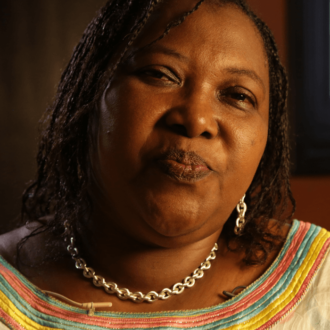
Mona Seif
Mona was raised in a family of human rights defenders. Her father Ahmed Seif El Islam is a respected Human Rights Lawyer who spent five years in prison under the Mubarak regime.
image image image

Mutabar Tadjibaeva - 2008

“They mutilated my body,” said Tajibayeva “but they have not broken my spirit.”

JavaScript is disabled!
To display this content, you need a JavaScript capable browser.

On 7 October 2005, Mutabar Tadjibaeva was arrested on her way to Tashkent airport, to catch a connecting flight to Dublin, Ireland, where she was due to attend an international conference on human rights defenders. She was taken to Tashkent prison and would spend the next several months in solitary confinement. On 6 March 2006, Tadjibaeva was sentenced to eight years' imprisonment on 17 different charges including "slander" and "membership of an illegal organisation".

In fact, Mutabar Tadjibaeva is an Uzbek human rights defender who was known for denouncing the government's crackdown on dissent and especially her work of monitoring human rights violations in the Ferghana Valley, information which she shared with the international human rights community. She was arrested in October 2005 after criticising the Uzbek government's handling of the Andijan massacre in May 2005.

She is the Chairwomen of the Uzbek human rights NGO "Plammenoe Serdtse" (Fiery Hearts Club), with its headquarters in Ferghana City. She is also a member of the Uzbek civil rights movement "Human Rights Alliance for Uzbekistan" and was a 2005 Nobel Peace Prize nominee.

In a letter written from prison, Tadjibaeva said "I have spent a whole month in solitary confinement for protesting against continuing moral and physical torture." "I am sure that I will not be able to see my relatives..." she confessed "because I have realised they will never release me." In spite of her own personal despair, her letter did not forget to implicate, by name, several key officials from the police and Tashkent Prison's medical department, responsible for her torture. Unfortunately, Tadjibaeva's psychological well-being would drastically deteriorate inuring long periods in solitary confinement and ill-treatment by prison staff. She was eventually transferred to a psychiatric unit at the women's detention centre in the Mirabad district of Tashkent.

In an open statement dated 10 August 2007, released by her brother, Rasul Tadjibaeva, it became clear that her physical health was worsening. "She has problems with her kidneys and heart and is suffering from rheumatism." Even Tadjibaeva's ailing health did not prevent her from calling on "all political prisoners in Uzbekistan to hold out until the victorious end", alluding to the slogan "We are right and therefore we will win!".

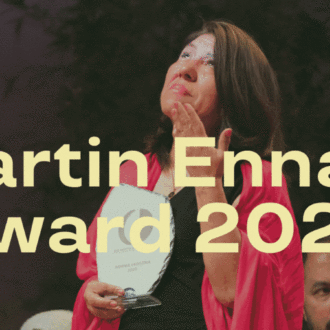
While Tadjibaeva was still imprisoned, the Martin Ennals Foundation announced her as the 2008 Martin Ennals Award winner in a press release sent out across the world on 19 May 2008. "The Government of Uzbekistan" the press release reads "has an historical opportunity to re-establish a dialogue with the international community by releasing Mutabar Tadjibaeva." Two weeks later, after a focused international campaign condemning Tadjibaeva's imprisonment by the UN, EU, western governments and various NGOs (especially the 10 international human rights organisations on the Jury of the MEA), the Uzbek authorities released Tadjibaeva on 2 June 2008. A few months later she was allowed to travel abroad (for medical reasons) and thus receive in person the 2008 Martin Ennals Award on 20 November 2008 at the Musée Ariana in Geneva.

After a tour of several European countries, she was awarded the prix de droits de l'homme de la République française in November 2008. However, in 2009, in an act of defiance, Tajibayeva rejected the US State Department's "Women of Courage Award", declaring that it is "insulting to my people and my nation to share an award with Roza Otunbaeva. I find it disgusting to be compared to a woman whose hands are covered in blood and who has long sullied whatever positive qualities she used to have."

Tadjibaeva now lives in Paris, from where she continues to give lectures across Europe on the subject of human rights. In May 2011, Lola Karimova-Tillayeva, daughter of Uzbek President Karimov, decided to sue the French website Rue89 for libel, over claims that the news site had described her father as a "dictator". Tadjibaeva and Nadezhda Atayeva, also an Uzbek human rights defender, gave evidence in the trial. In her testimony, Tadjibaeva gave a detailed account of the rape and torture she suffered while imprisoned in Uzbekistan between 2005 and 2008.


NEWS ARTICLES & INTERVIEWS

Mutabar Tadjibaeva (Oslo Freedom Forum) 2009

Geneva: Uzbek Human Rights Defender in prison wins 2008 Martin Ennals Award (Front Line Defenders) 19 May 2008

Uzbekistan: Further ill-treatment of human rights defender Mutabar Tadjibaeva (Front Line Defenders) 15 October 2007

Uzbekistan: Latest letter written by human rights defender Mutabar Tadjibaeva (Front Line Defenders) 7 August 2007

Campaign for Mutabar Tadjibaeva (Front Line Defenders) 18 April 2007

Concern for safety of Uzbek human rights defender and family (Front Line Defenders) 20 March 2007

In collaboration with
The City of Geneva

The Jury consists of 10
leading Human Rights NGO’s


The Panel of Regional NGOs support
the Jury with their in depth
Regional knowledge